
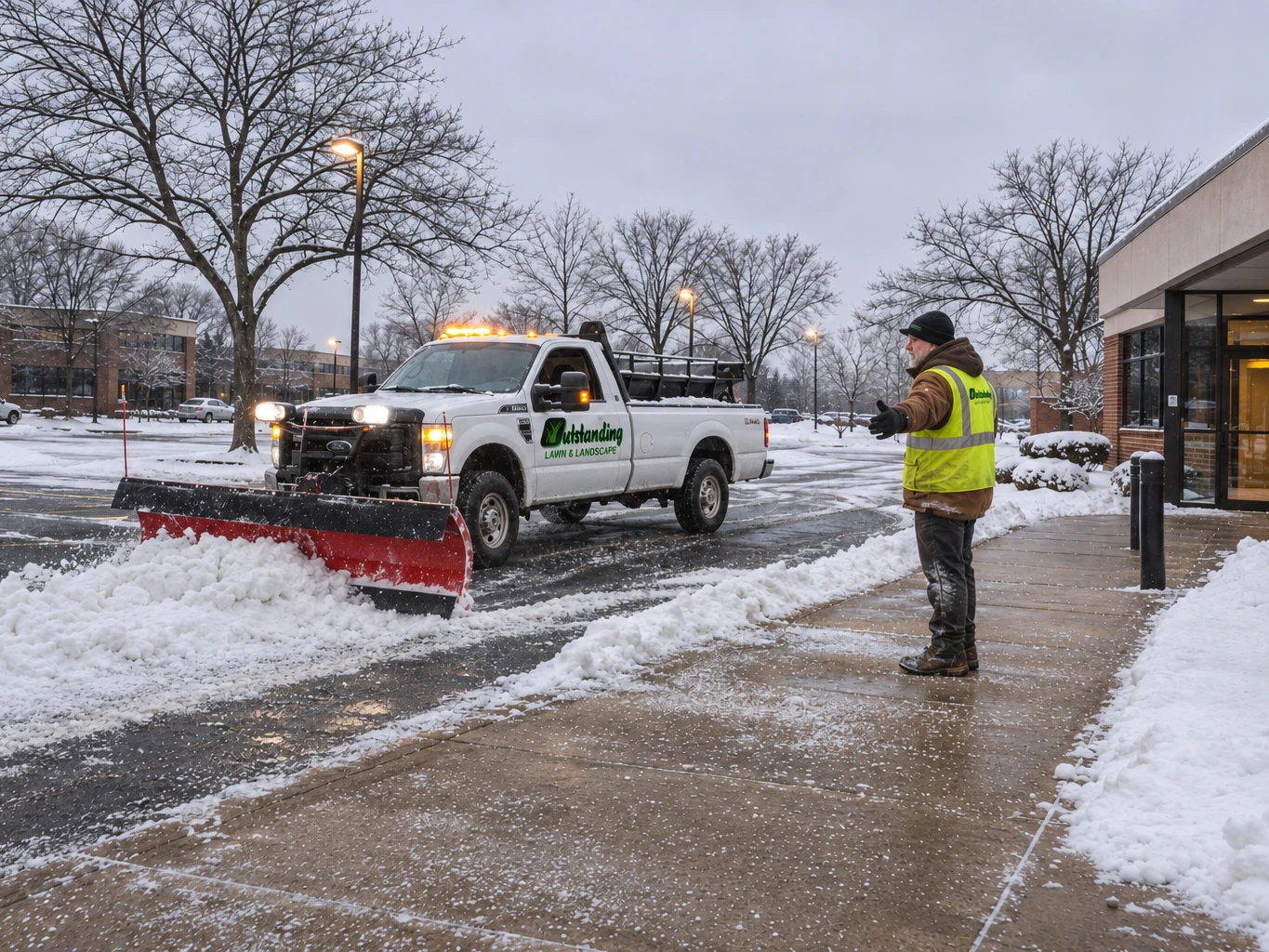
How to Choose a Commercial Snow Plowing Company for Your Michigan Office Park
Look for a written scope, a clear trigger depth, deicing that is either included or priced separately, proof of insurance, and documented service records. Then pick a contract type (per-push, seasonal, or hybrid) based on how much cost variation you can absorb and how big your lots are.
What does a commercial snow contractor actually handle for an office park?
At minimum, plowing the drive lanes and parking stalls, clearing entrances, and treating pavement so it does not refreeze. On a larger office park, the scope can also include walkways, building entries, dumpster enclosures, and places to pile snow so it does not block sight lines or drain back into the lot and freeze overnight.
Commercial snow work usually breaks into three pieces: plowing (pushing snow off the pavement), snow removal (hauling or relocating piles when there is nowhere left to put them), and deicing (treating surfaces to prevent or break up ice). Our commercial snow services cover snow plowing, snow removal, and deicing. Whoever you hire, make sure the contract says which of those three are included, because they are often billed differently.
Per-push, seasonal, or hybrid: which snow contract type fits your property?
Each contract type moves risk between you and the contractor in a different way.
Per-push (per-event)
You pay each time the crew plows or treats the property. In a light winter you pay less, and in a heavy one you pay more. It is easy to understand, but it is harder to budget, and it is worth confirming how a visit is defined. Does one storm with two passes count as one push or two?
Seasonal (flat fee)
You pay a set amount for the winter regardless of how many storms hit. Budgeting is simple. The tradeoff is that you may overpay in a mild winter, and some seasonal contracts cap the number of visits or exclude hauling and deicing. Read the exclusions before you compare prices.
Hybrid
Some agreements combine a base fee with per-event charges, or set a seasonal price for plowing with deicing billed per application. This can suit a property manager who wants a predictable baseline without locking in every storm. The details vary by contractor, so ask how each piece is priced and what triggers extra charges.
A practical way to compare: ask each bidder to price the same scope and the same trigger depth, then look at how the numbers behave in a light, average, and heavy winter. Southeast Michigan winters can swing a lot from year to year, and that swing is exactly what you are choosing how to handle.
What should you ask a snow plowing company before signing in Michigan?
- What is the plow trigger? Many contracts start plowing at a set accumulation, often somewhere around an inch or two, but it varies by property and contract.
- Who decides a storm is over? Clarify whether the crew returns for cleanup after snowfall ends, and by what time the lot should be open on weekdays.
- Where does snow get piled? A good contractor walks the site and marks pile areas before the first storm.
- What equipment do they run? Breakdowns in the middle of a storm leave your lot unplowed. We keep a lineup of newer trucks and trailers for that reason, and it is fair to ask any contractor about their fleet and backup plan.
- How do they communicate? You want to know who to reach during a storm and that you will hear back. Try calling or texting before you sign and see what happens.
- Is there a site walk-through? Curbs, catch basins, light poles, and islands are easier to handle when the crew has seen them without snow on top.
What insurance, liability, and documentation should a commercial snow contractor provide?
Ask for a current certificate of insurance and read what it covers. Contract language on liability and indemnification differs a lot between contractors, so it is worth having your own insurance agent or attorney look it over before you sign. A contractor who hesitates to hand over a certificate is telling you something.
Documentation matters just as much. If someone slips on your property and files a claim, records of when the lot was plowed and treated can make a real difference. Ask whether the contractor keeps service logs with dates and times, and whether photos are available on request. Then put those expectations in the contract, not just in a conversation.
How should plowing, deicing, and lot priorities work together?
Plowing and deicing do different jobs. Plowing removes the snow. Deicing keeps what is left from bonding to the pavement. In southeast Michigan, freeze-thaw cycles are a real problem: daytime melt runs across the lot and refreezes overnight, which is when people fall. Treating before a storm or right after plowing is often more useful than piling salt onto packed snow.
Product choice depends on temperature. Standard rock salt loses much of its effectiveness once pavement temperatures drop well into the teens, so ask what the contractor uses when it gets colder and whether that costs extra. Also ask how they limit salt near landscaping, concrete, and pavers, since overapplication can damage plant beds and hardscape.
Priorities are the last piece. Decide in advance which areas get cleared first. For many office parks that means main entrances and drive lanes first, then accessible parking and building entries, then remaining stalls and overflow areas. Put the order in writing so the crew is not guessing at 5 a.m.
When should you lock in a snow contract in Michigan?
Ideally before the first real snowfall. Many contracts are signed in October and November, and contractors plan routes and equipment around the properties they have already committed to. Waiting until the first storm can mean fewer choices and rushed walk-throughs.
A sensible timeline is to request bids in early fall, walk the property with your top two or three candidates, compare the same scope side by side, and sign before Thanksgiving. That leaves time to fix anything a walk-through turns up, like a missing pile area or a drain that needs marking.
We work across Oakland County communities including Walled Lake, Novi, Farmington Hills, Bloomfield Hills, Commerce Township, Milford, and Wixom. If you are comparing bids for a commercial property, feel free to get in touch and we can talk through your site and what you need.
Frequently asked questions
When should I sign a commercial snow plowing contract in Michigan?
Ideally in October or November, before the first significant snowfall. Early signing gives you more contractor choice and time for a site walk-through. Waiting until a storm is forecast can mean fewer options and a rushed start.
What is the difference between plowing and deicing for a commercial lot?
Plowing physically removes snow from the pavement. Deicing treats the surface so ice does not form or bond, which matters most during Michigan’s freeze-thaw cycles. Most lots need both, and contracts often bill them separately.
How many inches of snow usually trigger a plow visit?
It depends on the contract and the property. Many commercial agreements set the trigger at an inch or two of accumulation, but busy or sensitive sites may use a lower one. Whatever number you choose, get it written into the contract.
How do I check a snow contractor’s liability coverage for slip-and-fall claims?
Ask for a current certificate of insurance and read what it covers. Have your own insurance agent or attorney review the contract’s liability and indemnification language before you sign. Also ask about service logs, since dated records of plowing and treating can matter if a claim is filed.
Can an HOA use the same snow contractor as an office park?
Often yes, since the work (plowing, deicing, snow removal) is similar. HOAs tend to have different priorities, such as streets, sidewalks, and mailbox clusters, so the scope and trigger points should be written for that property. We work with HOA customers, so ask us about your situation.