Paver Driveway Installation vs. Concrete in Bloomfield Hills
Our post on paver walkway installation in Walled Lake, MI covered the process from base prep to final joint sand. Walled Lake and the surrounding Oakland County communities sit on clay-heavy soils that shift significantly through freeze-thaw cycles, a condition that affects every hardscape decision on a property. What that walkway post did not address is the unique pressure a driveway puts on a hardscape system compared to a walkway. Driveways carry vehicle loads, handle repeated freeze-thaw stress across the full width of a front yard, and set the visual tone for the entire property. For homeowners researching paver driveway installations bloomfield hills, mi, the real question is not just “how does installation work” but “which material is actually right for a driveway at this scale and in this climate.”
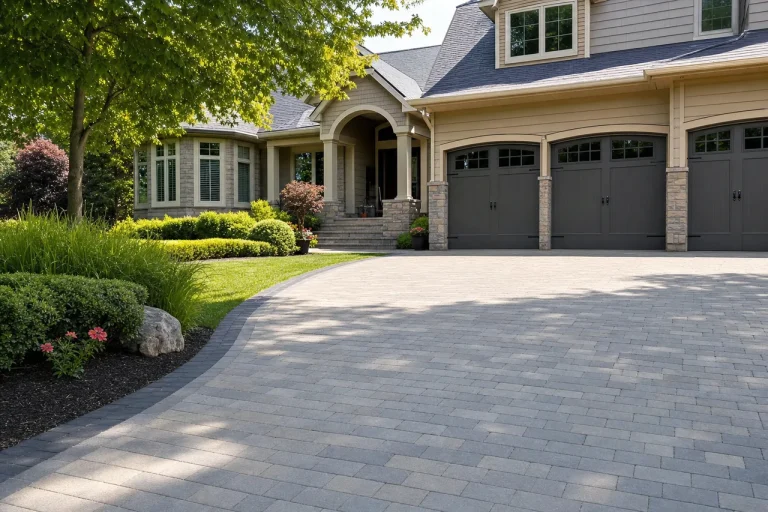
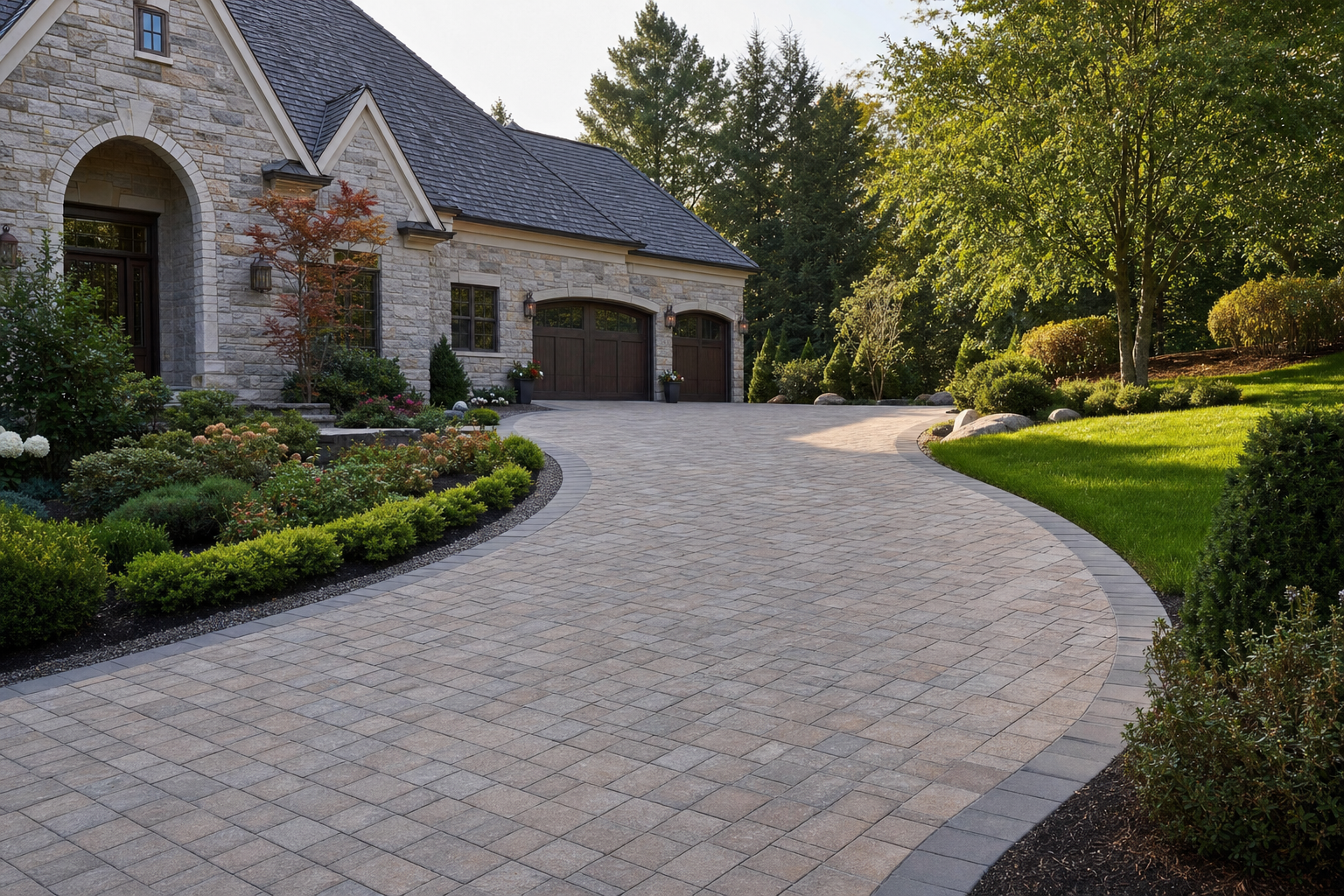
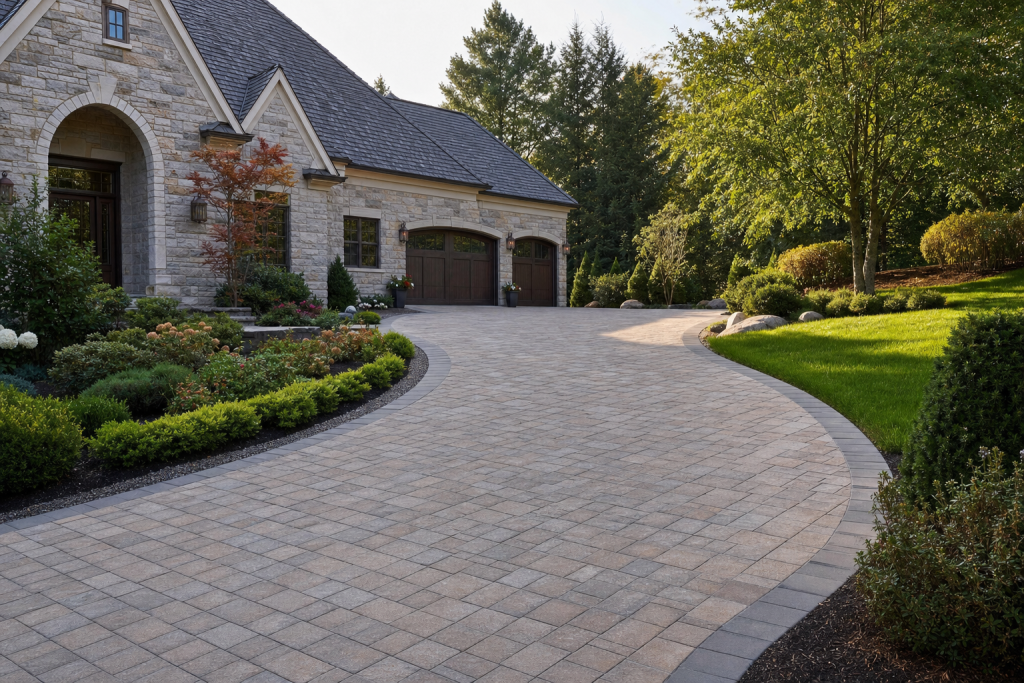
Paver driveway installation in Bloomfield Hills typically uses interlocking concrete or natural stone pavers over a compacted aggregate base. Compared with poured concrete, pavers can make localized repairs simpler when a section settles or is damaged. Either surface needs thoughtful drainage, base preparation, and compaction to perform well through Southeast Michigan winters.
Key Takeaways
- Pavers flex individually through freeze-thaw cycles, which makes them significantly more durable than poured concrete in Southeast Michigan.
- Concrete driveways cost less upfront but carry higher long-term repair and replacement costs in cold climates.
- Bloomfield Hills properties often have long, wide driveways where the aesthetic difference between pavers and concrete is especially visible from the street.
- Damaged pavers can be replaced one at a time, while concrete damage typically requires removing and pouring an entire section.
- Proper base depth and compaction matter more than the surface material itself, and both options require professional installation to perform correctly.
Option A: Paver Driveways
A paver driveway uses individual interlocking units, either concrete pavers, clay brick, or natural stone, set over a compacted gravel base with bedding sand underneath. The units are not bonded together with mortar. Instead, they rely on edge restraints and joint sand to stay in place and distribute load across the base.
That flexible structure can be an advantage in our region. When soils move through winter freeze-thaw cycles, individual pavers may be releveled or replaced without removing an entire driveway section. For a paver driveway installation in Bloomfield Hills, that repairability is worth weighing alongside the initial budget and the look you want for the property.
Pros: Excellent freeze-thaw durability, individual unit repairability, wide range of patterns and colors, strong curb appeal at the scale of larger Bloomfield Hills properties, no curing wait time after installation.
Cons: Higher upfront cost than poured concrete, joint sand requires occasional replenishment, weeds can establish in joints if maintenance is neglected, and installation requires skilled base preparation to prevent settling.
Option B: Poured Concrete Driveways
Poured concrete is a monolithic slab installed over a compacted base, typically with control joints cut at intervals to manage where cracking occurs. It is the most common driveway material nationally, and it performs reasonably well in moderate climates.
In Southeast Michigan, winter moisture and freeze-thaw cycles make drainage, base preparation, and joint placement important considerations for any driveway. Concrete control joints help manage movement, but a rigid slab can be more involved to repair when damage affects a section of the drive.
Winter products also deserve care around any new driveway and its surrounding plantings. Michigan State University Extension explains how deicing salts can affect nearby landscape soil and plants, so use traction products thoughtfully and follow the material manufacturer’s guidance.
Pros: Lower upfront installation cost, clean uniform appearance, widely available contractors, faster installation process.
Cons: Prone to cracking in freeze-thaw climates, surface degrades with repeated deicing chemical exposure, repairs require full section replacement rather than individual unit swaps, and resale value on Bloomfield Hills properties is lower than a comparable paver installation.
What Are the Real Differences in Cost, Durability, and Maintenance?
Upfront, concrete typically runs 40 to 60 percent less per square foot than a paver installation. On a large Bloomfield Hills driveway, that gap can be significant. But the long-term math shifts when you factor in repairs. A single cracked concrete section can require removing and repouring from joint to joint, which adds up quickly. A damaged paver section means pulling and replacing individual units, often without disturbing the surrounding area at all.
Maintenance for pavers involves periodic joint sand top-off, occasional re-leveling of settled units, and sealing every few years to protect the surface and enhance color. Concrete maintenance involves crack sealing, surface sealers, and eventually resurfacing or full replacement. Neither option is maintenance-free, but paver repairs are far less disruptive and less expensive per incident.
Long-term results depend more on drainage, base depth, compaction, and maintenance than on a single material choice. Our paver patio guide for Bloomfield Hills covers several soil and base-preparation considerations that also matter for a driveway.
What Works Better for Paver Driveway Installations Bloomfield Hills, MI Specifically?
Bloomfield Hills is part of Oakland County, where homeowners commonly need a driveway plan that accounts for winter weather, drainage, and the condition of the existing base. The right choice starts with an on-site review of the grade, water movement, vehicle use, and any nearby hardscape elements.
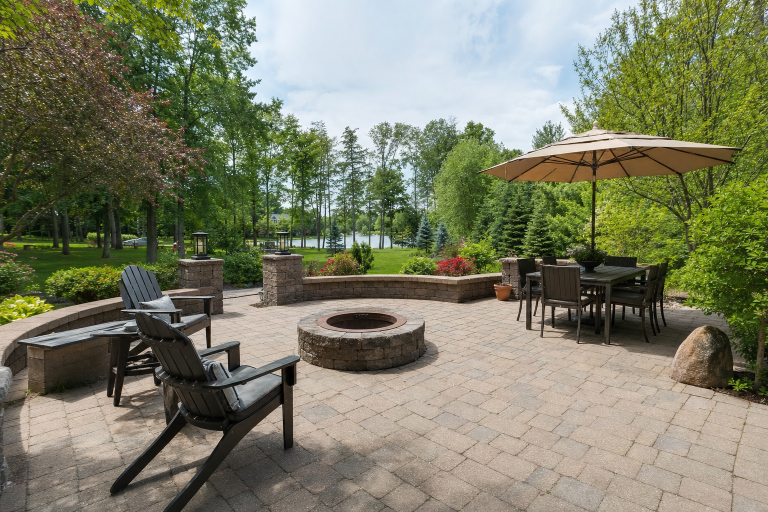
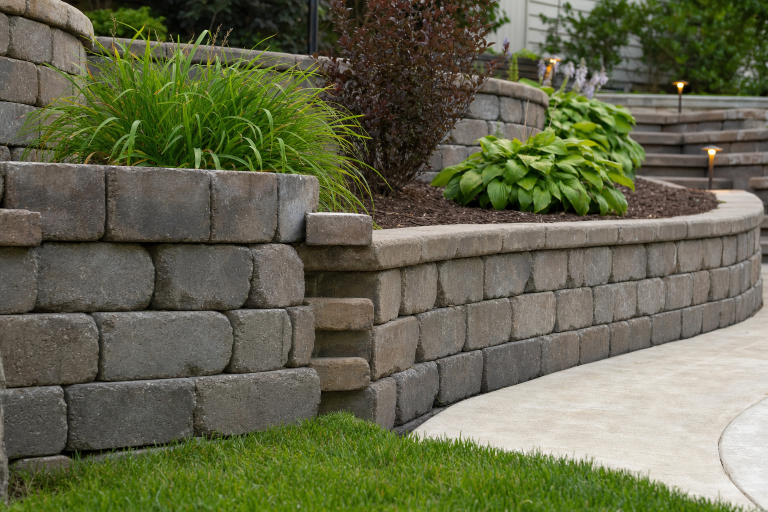
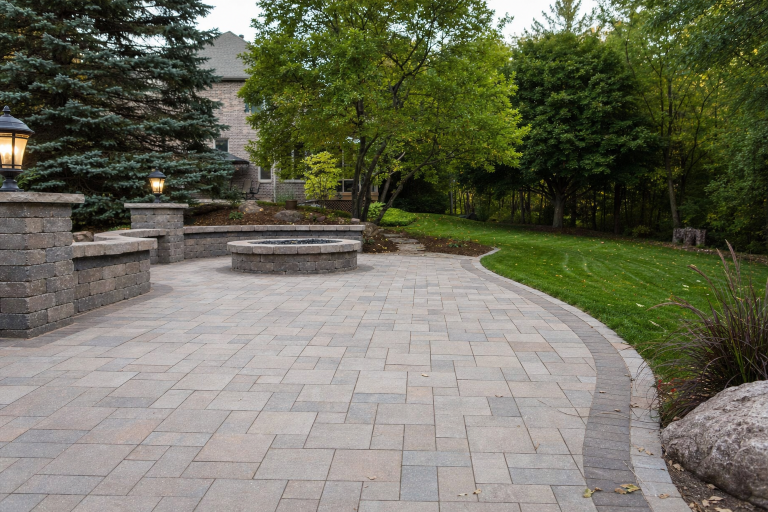
When a driveway connects to walkways, retaining walls, or patios, material selection can also shape the overall look of the front property. Matching pavers across related hardscape features can create a cohesive design, while concrete may make sense for a simpler, budget-first approach.
For Bloomfield Hills and nearby communities we serve, the same core questions apply: how will water move, what base preparation is needed, and how easily can the finished surface be maintained or repaired over time?
What We Typically Recommend and Why
Pavers are worth considering when design flexibility, repairability, and a coordinated hardscape look matter most. The upfront cost difference is real, so the decision should balance budget, expected use, drainage conditions, and the value you place on replacing individual sections rather than a larger slab area.
Concrete can make sense for a straightforward driveway with a tighter initial budget. A well-installed concrete driveway still needs proper base preparation, drainage, and control-joint planning to serve the property well.
Before excavation or edge-restraint work begins, arrange utility marking through MISS DIG 811. It is a simple planning step that helps protect buried utilities before the project starts.
Our hardscaping services cover driveway planning, base installation, and paver selection. If you are ready to talk through what your specific property requires, reach out to our team and we can walk through the details with you.
Frequently Asked Questions
How long does a paver driveway last in Bloomfield Hills, MI?
A properly installed paver driveway with adequate base depth and compaction can last 30 to 50 years in Southeast Michigan. The key variable is base preparation, not the pavers themselves. Oakland County’s clay soil requires deeper aggregate bases than sandy soil regions to prevent settling and heaving over time.
Can I use deicing salt on a paver driveway without damaging it?
Concrete pavers are more resistant to deicing chemicals than poured concrete, but repeated use of salt still accelerates surface wear over many seasons. We recommend sand or fine gravel as the primary traction aid in winter, with deicers used sparingly. Sealing the pavers periodically also adds a layer of protection against chemical penetration.
How much more does a paver driveway cost compared to concrete in the Bloomfield Hills area?
Paver driveways typically run 40 to 60 percent more per square foot than poured concrete in this market, depending on paver material, pattern complexity, and site conditions. On a large Bloomfield Hills driveway, that difference can be substantial. However, lower long-term repair costs and higher property value contribution often offset that gap over a 15 to 20 year period.
Do paver driveways require a lot of maintenance?
Routine maintenance is minimal. Joint sand may need replenishment every few years, and occasional re-leveling of individual settled units may be needed after particularly harsh winters. Sealing is optional but extends the life of the surface color and makes cleaning easier. Compared to concrete, which requires crack sealing and eventual resurfacing, paver maintenance is generally less invasive and less expensive per incident.