Fall Cleanup in Novi: A Smarter September Plan
The first cool mornings in Novi can make fall cleanup feel like one big weekend project: cut everything down, collect every leaf, and put the landscape away until spring. A better plan starts earlier and works in stages. September is the month to observe what needs attention, clear the areas that affect lawn and drainage function, and schedule the heavier work before peak leaf drop fills the calendar.
A thoughtful fall cleanup protects the parts of the property that must stay open and orderly while leaving appropriate plant structure and habitat where it still has value. The result is not a stripped landscape. It is a site that enters winter cleanly, drains well, and is easier to restart next spring.
Begin With a September Property Walk
Walk the yard after a light rain and again on a dry day. Look for leaves collecting in corners, water bypassing a catch basin, branches rubbing siding, weeds setting seed, and lawn areas that stayed thin after summer. Take photos so the spring plan does not depend on memory.
Outstanding provides landscape maintenance for Southeast Michigan properties. A September walkthrough gives the team time to distinguish routine cleanup from drainage, pruning, or landscape work that deserves a separate plan.
Divide the Property Into Four Cleanup Zones
Thinking in zones keeps important tasks from getting buried under a mountain of leaves.
Lawn surfaces
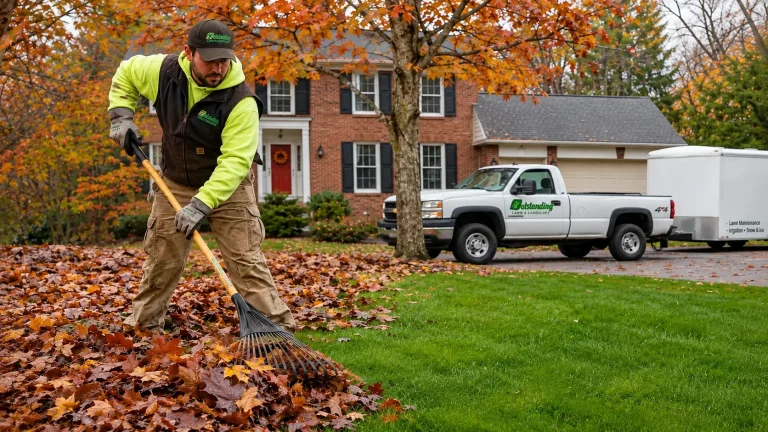
Leaves do not need to be chased one at a time, but thick layers should not sit long enough to mat the grass. Repeated removal or mulching during peak drop is often more manageable than waiting until the entire canopy is down. Wet, compacted piles are harder to collect and can block light and air at the turf surface.
Use the final mow to leave an orderly lawn without scalping it. Michigan State University Extension recommends lowering the mower only one notch for the last cut rather than making a dramatic height change. The exact final height should still match the grass type and current conditions.
Planting beds
Remove annuals that are finished, obvious diseased material, storm debris, and weeds carrying mature seed. Do not assume every perennial must be cut to the ground. Some sturdy stems and seed heads add winter structure and can support birds or beneficial insects. Plants that flop across walks, shelter problem debris, or show disease may deserve a different treatment.
If bed edges, plant spacing, or declining shrubs need more than cleanup, connect the observation to landscape design and installation rather than forcing a redesign into a seasonal visit.
Drainage paths
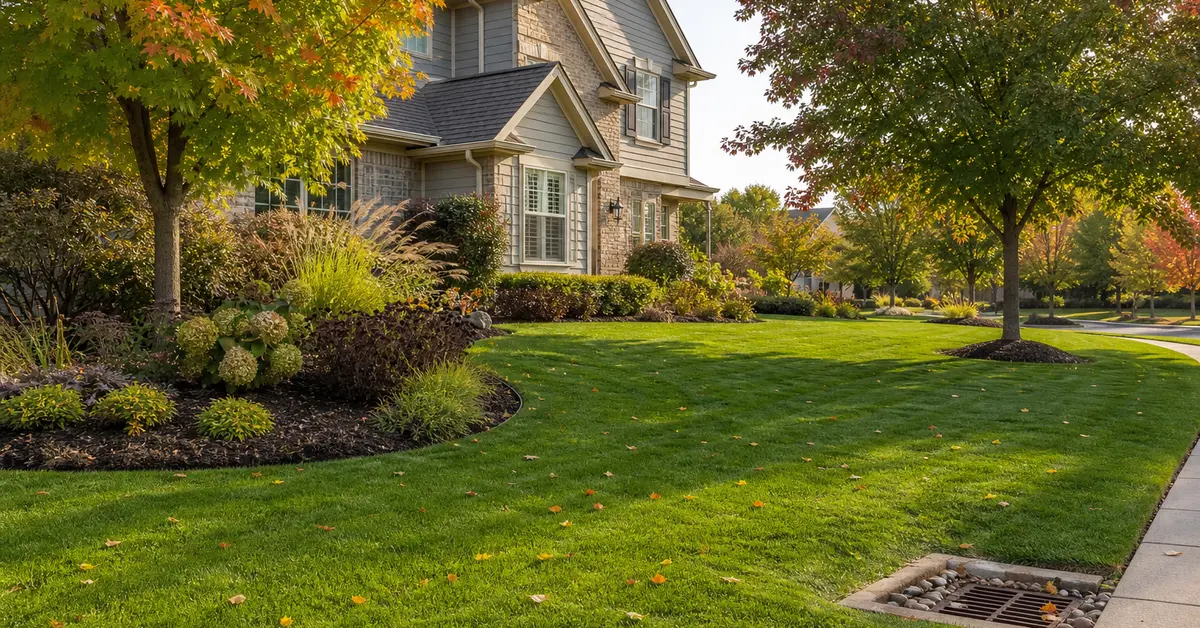
Leaves commonly collect over catch basins, in swales, along curb openings, and beneath downspouts. Clear these locations before a heavy autumn storm. Water that cannot reach its intended outlet may spread across lawns, saturate bed edges, or freeze later on walking surfaces.
Persistent pooling after debris is removed may indicate a larger grade or drainage issue. Outstanding’s guide to French drain installation in Southeast Michigan explains why the cause matters more than repeated leaf clearing alone.
Hardscape and outdoor living areas
Sweep leaves from patios, steps, and walkways before they become wet and slick. Move lightweight accessories according to manufacturer guidance, inspect joints and edges, and note areas where water stands after rain. A fall cleaning should preserve the hardscape, not introduce aggressive treatment that damages pavers or joint material.
What to Do Early, During Peak Drop, and Late
Early fall: inspect and correct
In September, remove weeds before they release more seed, cut back material that is clearly diseased or obstructive, and clear drainage inlets. Repair small lawn damage where timing and site conditions are appropriate. Document larger work for a separate proposal.
Early fall is also useful for reviewing irrigation. As temperatures cool and rainfall patterns change, the summer schedule may apply more water than the landscape needs. If heads are broken or coverage is uneven, coordinate irrigation repair and maintenance before winterization.
Peak leaf drop: manage in rounds
A staged service can keep turf and high-use areas open without pretending the final leaf has already fallen. Prioritize front walks, driveways, lawn surfaces, and drainage points. Leaves in designated naturalized or bed areas can be evaluated differently from leaves forming a wet layer on grass.
On large properties, discuss which areas receive full removal and which retain an appropriate natural layer. The decision should consider plant type, drainage, neighborhood expectations, and how the space is used.
Late fall: finish without overdoing it
Once most leaves are down and turf growth slows, complete the final lawn service appropriate to the season, make the last drainage check, and secure the property for winter. Do not pile excess leaves against tree trunks, foundations, or structures. Confirm that gates, outdoor fixtures, and access points remain usable for snow and winter service.
Outstanding’s Novi service-area page helps homeowners confirm the local service context when coordinating fall work.
Cleanup Decisions That Should Be Selective
Perennial cutback
Cut back plants that have collapsed across paths, become diseased, or create an obvious maintenance problem. Consider retaining sturdy, healthy seed heads where they add winter form or habitat. The goal is intentional structure, not neglect and not a bare bed by default.
Leaf mulching
A mower can reduce a light layer of dry leaves into smaller pieces, but it should not be used to hide a heavy, wet mat. If shredded leaf material remains thick enough to cover the grass, collect the excess. Conditions matter more than a blanket rule.
Shrub pruning
Fall cleanup is not permission for broad, shape-driven pruning of every shrub. Pruning timing varies by species and flowering cycle. Remove broken or hazardous material, but schedule plant-specific pruning when it benefits the plant rather than merely because the crew is present.
Mulch touch-up
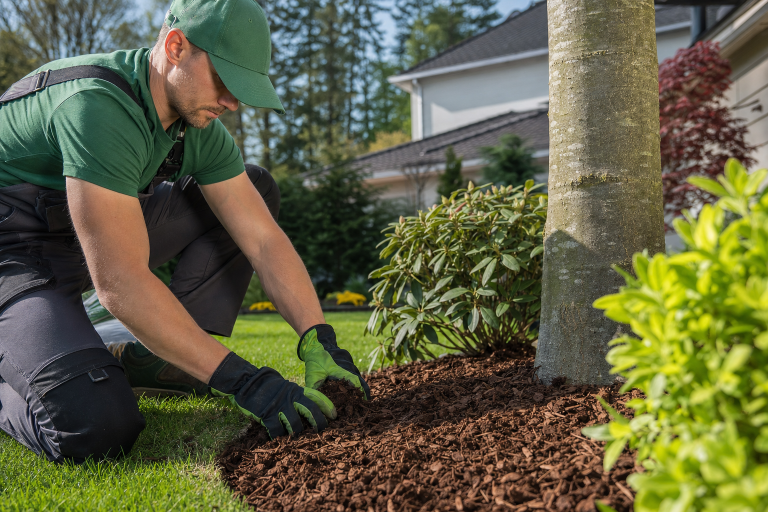
Mulch can make beds look finished, but depth and placement matter. Avoid piling it against trunks or crowns. If beds need a complete reset, pair the cleanup with a reviewed landscape enhancement plan instead of adding material without correcting edges, weeds, or drainage.
A Practical Fall Cleanup Checklist
Before the first major service, decide:
- which lawn and high-traffic areas must remain leaf-free;
- where natural leaf or stem structure may remain intentionally;
- whether storm drains, catch basins, and swales are clear;
- which weeds or diseased material need prompt removal;
- whether irrigation repairs are needed before shutdown;
- which pots, furniture, and accessories will be stored;
- whether the property needs one visit or staged service; and
- what observations should become spring improvement projects.
This checklist is especially useful for homeowners who use a complete landscape service plan. It turns cleanup into coordinated property care instead of an isolated debris-removal task.
Frequently Asked Questions
When should fall cleanup start in Novi?
September is a useful time for inspection, weed control, light leaf management, and scheduling. Heavier leaf removal usually follows in stages as trees drop. The best timing depends on the property’s canopy, turf growth, drainage, and the level of access that needs to remain clear.
Should every perennial be cut down in fall?
No. Diseased, collapsed, or obstructive material may need removal, while sturdy healthy stems and seed heads can provide winter interest and habitat. Plant type, location, and the homeowner’s goals should guide the decision.
Is it okay to leave leaves on the lawn?
A few dry leaves are different from a deep, wet layer. Leaves can be mulched when conditions and volume allow, but thick accumulation should be managed so it does not mat over the turf or block drainage points.
Can fall cleanup fix standing water?
Clearing a blocked inlet or swale may restore normal flow. If water still pools after debris is removed, the property may need drainage assessment, grade correction, or another designed solution. Cleanup can reveal the issue without necessarily solving its cause.
Give the Property an Orderly Transition
Fall cleanup works best as a sequence: observe in September, manage leaves as they drop, and finish with restraint once growth slows. That approach protects the lawn and drainage while respecting the parts of the landscape that still provide structure.
To plan seasonal service around the way your Novi property is actually planted and used, contact Outstanding Lawn & Landscape. A clear scope now creates a cleaner winter property and a more useful spring project list.