Should You Rake or Mulch Fallen Leaves Before Winter in Michigan?
Do both, depending on the layer. Mulch-mow when leaves are light and dry, and rake or blow them off when they are thick or wet. Either way, remove or finely chop leaves before snow stays on the ground, because a thick, matted layer can smother grass and invite snow mold.
Is it bad to leave leaves on your lawn over a Michigan winter?
It depends on how many leaves there are and what shape they are in. Whole leaves that pile up and get soaked by fall rain and wet snow form a dense mat. That mat blocks light and air, holds moisture against the grass blades, and keeps the turf wet and cold for months. Most lawns in Oakland County are cool-season grasses like Kentucky bluegrass, ryegrass, and fescue. They keep growing slowly and photosynthesizing into late fall, so they benefit from light and air until the ground freezes.
When the snow melts in March, a lawn that spent the winter under a leaf mat often looks thin, matted, or patchy. The grass is not always dead, but it starts spring behind and takes longer to recover.
A light layer is a different story. If the leaves are chopped into small pieces and settle down between the grass blades, they break down over winter and feed the soil. The problem is not leaves in general. It is a thick layer of whole, wet leaves.
Rake, mulch-mow, or blow: which leaf method works best?
All three work when they are matched to the yard. The right choice depends on how many leaves fall, what kind of trees you have, and how much time you have before the weather turns.
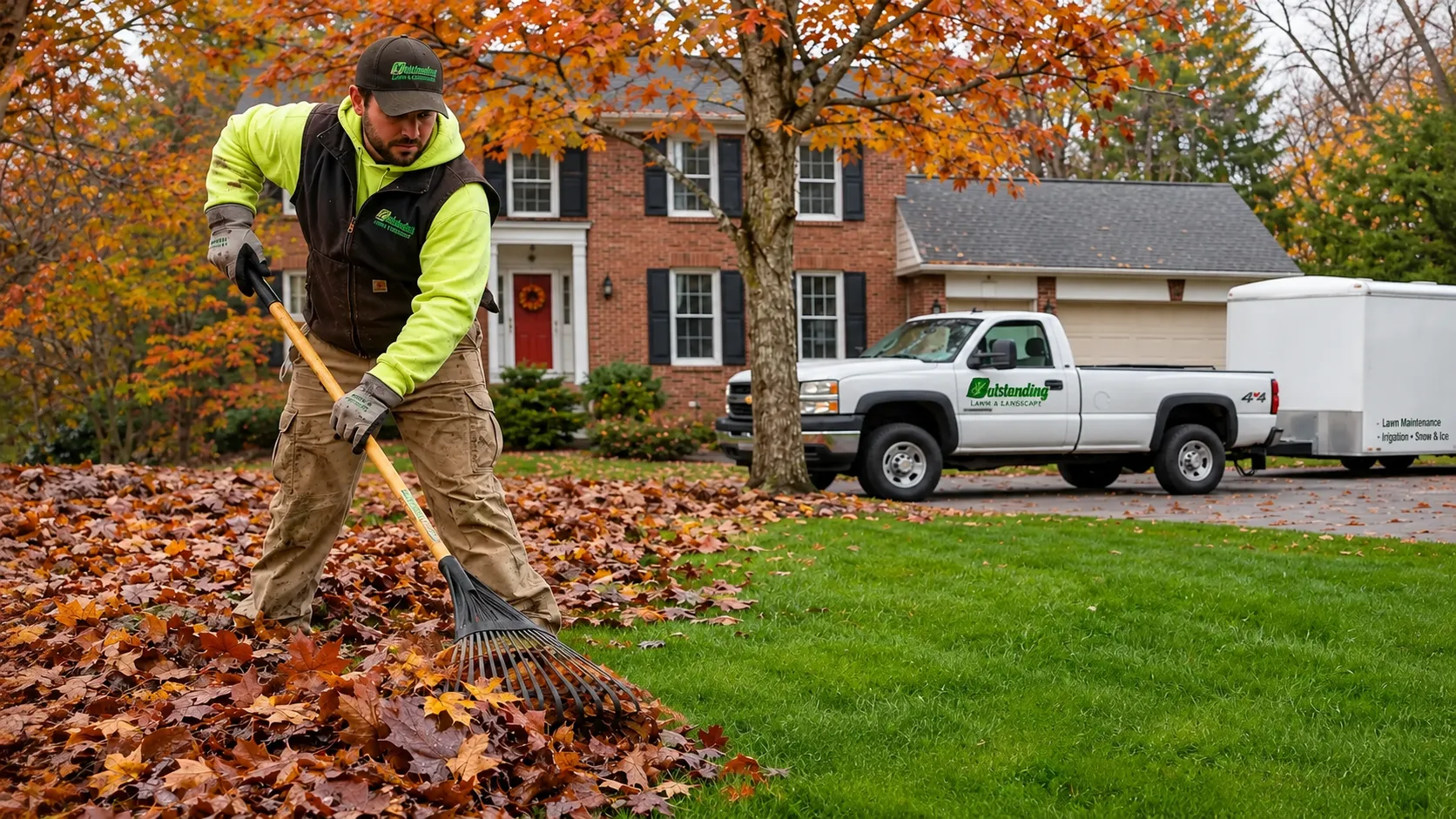
- Raking: best for heavy leaf drop, matted areas, and small yards. It takes more effort but is thorough. Avoid raking hard on soft, wet turf.
- Mulch-mowing: best for a light to moderate drop of dry leaves. It is low effort because it happens during regular mowing. Watch for clumps that still cover the grass.
- Blowing: best for open lawns and for getting leaves out of beds. It is fast on large areas, but you still need a plan to collect or move the leaves.
In short, mulch-mow when the layer is light and dry, and rake or blow and remove the leaves when they are heavy, wet, or covering the grass completely.
How to mulch-mow leaves properly
The simple test is whether you can still see grass through the shredded leaves when you finish. If you can, you are fine. If the lawn looks like it is covered in a brown blanket, the layer is too thick.
- Mow when the leaves are dry. Wet leaves clump and do not chop well.
- Go over heavy areas twice, or make a second pass in a different direction.
- Do not drop the mower to its lowest setting for the sake of shredding. Scalping the lawn going into winter is its own problem.
- If the mower throws leaves back out in clumps, rake or blow those spots and take the leaves away.
Oak leaves are the usual trouble. They are tough, they break down slowly, and many oaks hold their leaves into November and beyond, so you may need more than one pass.
What should you do with leaves in landscape beds and around shrubs?
Beds are a little more forgiving than turf, but a few things are worth checking before winter.
A light layer of leaves can serve as natural mulch in many perennial or shrub beds. A deep, soggy pile is where trouble starts. It can hold moisture against the crowns of perennials and the base of shrubs, and it gives mice and voles a cozy place to spend the winter. Leaves also hide weeds and debris that you would rather deal with now than in April.
A practical approach for most beds:
- Clear heavy leaf buildup, especially against foundations, around evergreen shrubs, and over low perennials.
- Cut back and remove any diseased plant material, rather than leaving it to overwinter in the bed.
- Leave a light, shredded layer if you like, or top the bed with fresh mulch.
- Pull leaves out of window wells, drains, and low spots where water collects.
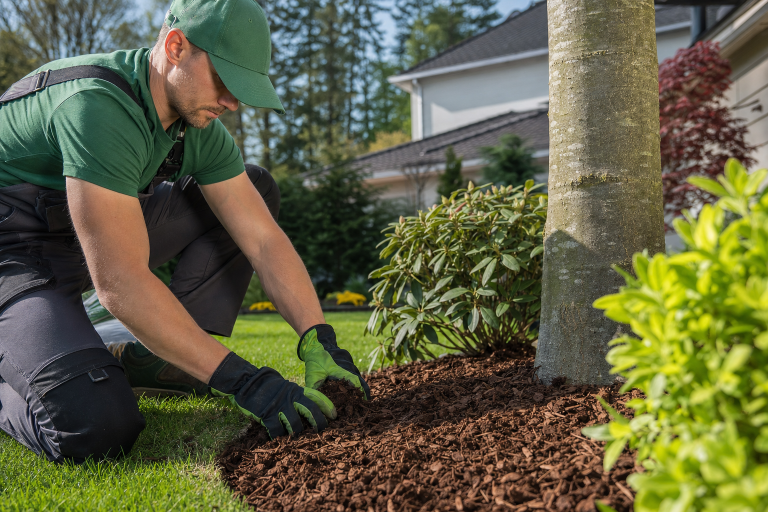
If you plan to add winter mulch, clear the beds first. Putting new mulch over a thick wet layer of leaves traps moisture and makes the bed matted and messy by spring. Mulch installations are part of the landscape maintenance work we do alongside fall cleanups, and the order matters: clean the bed first, then mulch.
How late can you still remove leaves in Southeast Michigan?
In Southeast Michigan, most leaves come down from late October through mid-November, and a few species hang on longer. That means one cleanup in early October is rarely enough. The practical goal is to get the bulk of the leaves off before the first snow that is going to stay.
If you have missed that window, it is still worth removing leaves, as long as you can do it without hurting the lawn.
- Rake or blow when the ground is firm. Soggy, thawing turf tears easily, and raking it hard pulls up grass crowns.
- A few inches of snow on top is not a showstopper. If it melts off and the leaves are accessible, you can still get them.
- If the lawn is frozen and covered with a solid crust of snow and leaves, wait for a thaw instead of forcing it.
- If leaves are still on the lawn in the late-winter thaw, clear them as soon as the ground is workable. This is part of a spring cleanup, and getting to them early helps the grass dry out and recover.
A final pass after the last trees drop, usually in mid to late November, is what most properties need to head into winter clean.
What happens when wet leaves sit under snow, and what is snow mold?
Snow mold is a lawn disease that develops under long-lasting snow cover on grass that is still damp. You see it when the snow melts: circular patches of matted grass, sometimes with a gray or pinkish, web-like growth on the surface. Gray snow mold and pink snow mold are the two common types in the Midwest.
A thick mat of leaves makes it much more likely. Leaves hold moisture against the turf, keep air from circulating, and prevent the grass from drying out between snowfalls. Tall grass going into winter, heavy thatch, and piles of leaves or snow pushed onto the lawn all add to the risk.
Most snow mold looks worse than it is. In many cases the roots survive, and a light raking in spring to fluff up the matted grass is enough to get new growth going. Severe patches may need some overseeding. Prevention is much easier than repair: clear leaves, keep the final mow at a reasonable height, and avoid piling leaves or snow in the same spots every year.
When does it make sense to hire a crew for leaf removal?
Plenty of homeowners handle leaves themselves, and that works well on small lots with a couple of trees. A crew starts to make sense when:
- You have mature oaks or maples and the leaf drop is more than you can keep up with.
- The property is large, or you are managing common areas for an HOA.
- The leaves came down late and you are running out of time before snow.
- You want beds cleaned out and the property left tidy, and you would rather hand off the work.
Fall Cleanups and Leaf Removal is part of our landscape maintenance services, and we work with both residential and HOA customers. Whoever you hire, ask what is included: lawn, beds, hauling, and whether a second visit is planned for late-dropping trees.
If you are not sure what your yard needs before winter, get in touch with us and we can talk it through.
Frequently asked questions
Can I mulch leaves with my lawn mower instead of raking?
Yes, if the leaf layer is light to moderate and dry. Mow slowly, make a second pass over heavy spots, and check that you can still see grass through the shredded pieces. If the lawn is still covered, rake or blow the excess and take it away.
Is it okay to leave a thin layer of leaves on the lawn?
A thin layer of finely chopped leaves is fine and breaks down over winter. A thick or matted layer of whole, wet leaves is the concern, because it can smother the grass and encourage snow mold. The rule of thumb is that grass should be visible through whatever is left.
What do I do with leaves after raking them in Michigan?
You can compost them, spread a thin layer in beds, or bag or bring them for yard waste collection. Rules for curbside pickup and drop-off vary by city and township, so check with yours. Do not push leaves into storm drains, ditches, or waterways.
Should I remove leaves from beds before applying winter mulch?
Yes, clear heavy or soggy leaf buildup first. Mulch over a thick wet layer of leaves traps moisture and can leave the bed matted by spring. A light, shredded layer of leaves is usually fine to leave in place.
How many leaf cleanups does a typical Michigan yard need in fall?
Many yards with mature trees need two or three passes, because leaves fall over several weeks and oaks drop late. A common plan is one cleanup in mid-fall and a final one after most trees are bare, often in mid to late November.