French Drains in Walled Lake, MI: Smarter Drainage for Clay Soil
If standing water keeps showing up in your yard after every heavy rain, you are not alone. Walled Lake properties often deal with slow drainage because of dense clay soil, flatter grades, and runoff that has nowhere useful to go. A properly planned french drain creates a controlled path for water, which helps protect your lawn, landscape beds, and foundation from recurring soggy areas.
At Outstanding Lawn & Landscape, we look at how water is moving across the full property before we recommend a fix. That includes the grade around the home, low spots in the yard, nearby hardscapes, and where the water can discharge safely. When the design is right, a french drain helps solve the root problem instead of just masking the symptoms.
Why French Drains Make Sense in Walled Lake
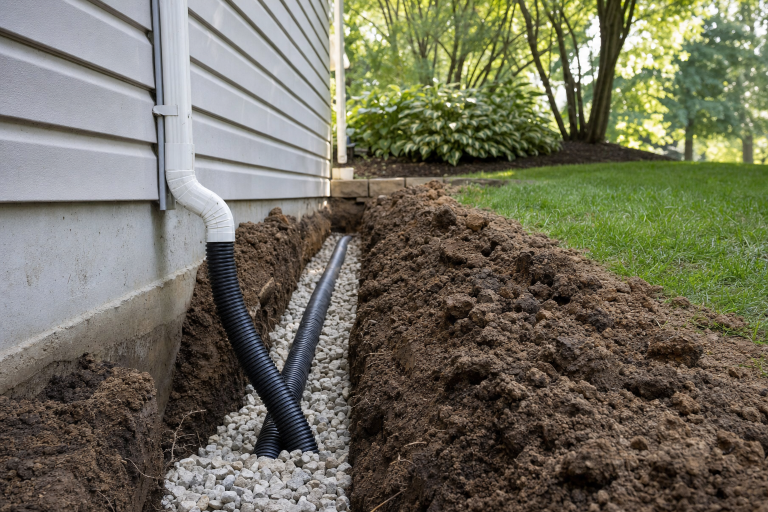
Local clay soil holds water longer than looser soils, especially in spring and after extended summer storms. Around Walled Lake, that can lead to puddling near patios, soft turf that never fully dries out, and moisture pressure around the foundation. A french drain gives excess water an easier route through gravel and perforated pipe, redirecting it away from the trouble area.
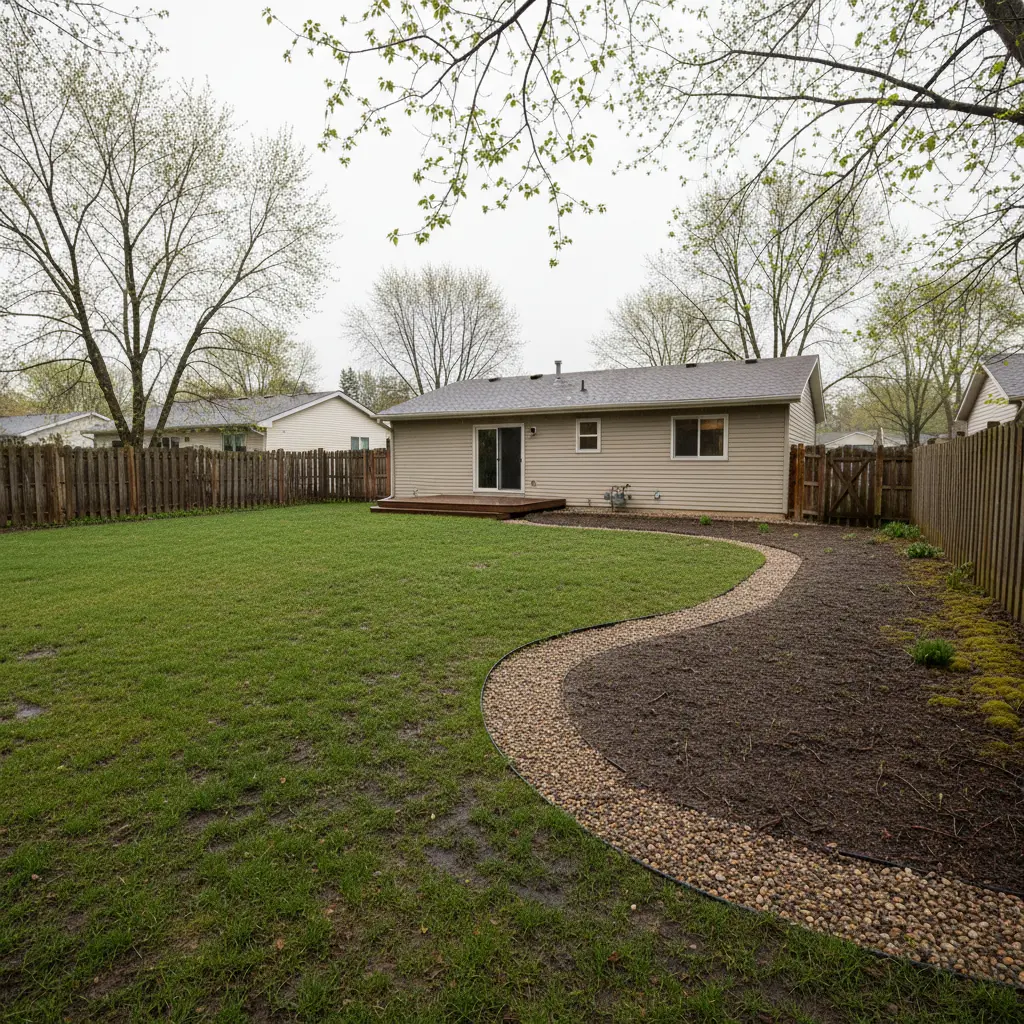
This is especially helpful for homes with low backyard sections, recurring wet spots near downspout outlets, or drainage that flows back toward the house. If the problem is persistent, a drainage solution is usually more effective than repeatedly reseeding damaged grass or trying to patch the issue with surface-only fixes.
Common Drainage Problems We See
Every yard is different, but a few patterns come up again and again. Some homeowners call because water pools near the foundation after storms. Others have lawn areas that stay muddy long after the rest of the yard dries out. We also see properties where runoff from a neighboring lot or a sloped side yard keeps washing into beds, walkways, or basement-adjacent areas.
In each case, the goal is the same: collect water before it causes damage and send it to a better discharge point. That may involve a surface drain tied into the system, a longer trench run along a problem area, or a layout that works with the natural grade of the property.
What a Good French Drain Installation Includes
A good system is more than a trench filled with stone. The trench needs the correct slope, the pipe needs to be placed and wrapped correctly, and the surrounding materials need to resist clogging over time. We use drainage fabric, washed stone, and a layout that matches the way your yard actually handles water.
We also pay close attention to the discharge point. Water has to end up somewhere appropriate, whether that is a lower part of the property, a pop-up emitter, or another approved outlet. Sending water away from one issue should not create a new one near a fence line, sidewalk, or neighbor’s yard.
When to Install a French Drain
Spring and fall are both strong times for drainage work because the problem areas are usually easy to spot and the ground conditions are practical for installation. That said, if you are dealing with ongoing foundation moisture, standing water, or erosion, it is better to address it once the problem is clear than to wait and let the damage continue.
One of the biggest advantages of scheduling the work while the issue is active is that we can see exactly how water is behaving on your property. That makes it easier to design a system that solves the real drainage pattern instead of guessing.
Supporting Improvements That Often Help
A french drain is sometimes the full solution, but in other cases it works best alongside other drainage improvements. Downspout extensions, light grading changes, catch basins, or a broader yard drainage plan can all improve results. If parts of your yard are already damaged by moisture, restoring the affected turf or landscape after the drainage work is often the final step.
If you are comparing options, it also helps to look at the broader condition of your yard and landscape so the finished result feels complete instead of pieced together.
Get a Drainage Plan That Fits Your Property
If your lawn stays wet, your beds wash out, or water keeps collecting where it should not, it is time to get a closer look at the grade and drainage layout. Outstanding Lawn & Landscape can inspect the problem areas, explain what is causing them, and recommend a practical fix for your Walled Lake property.
To get started, contact our team to schedule a drainage evaluation. We will help you determine whether a french drain is the right answer and what additional improvements, if any, will give you the best long-term result.
Frequently Asked Questions
Will a french drain help with standing water in my yard?
Yes, a french drain is often one of the best options for recurring low spots and soggy areas because it captures and redirects water below the surface.
Can a french drain protect my foundation?
It can help reduce moisture pressure near the home when the drainage issue is caused by runoff or groundwater collecting around the foundation area.
How do you know where the water should discharge?
We look at the grade, water source, and layout of the property so the system sends water to a safe and appropriate outlet without creating a new problem elsewhere.
For general landscape and lawn best practices, homeowners can also review resources from USDA-supported Extension programs.