Landscape Design in Walled Lake MI: How a Real Plan Comes Together
Most homeowners searching for landscape help in Walled Lake, MI are not looking for a quick mulch refresh. They have a yard that has stopped working for them, a front elevation that looks unfinished, a backyard that floods after every rain, or a property they have owned for years and never quite gotten around to making look intentional. Walled Lake sits on heavy Oakland County clay that holds water far longer than most homeowners expect, and that soil reality shapes every planting and grading decision from the start. That search for “landscaping near me” is almost always the surface expression of a bigger question: where do I even start? That is exactly what landscape design Walled Lake MI planning is built to answer. It gives a property a logical sequence, a structure that accounts for how you actually use the space, what the soil and drainage conditions will allow, and what will hold up through a full Michigan seasonal cycle.
What Landscape Design Actually Involves
A lot of people assume design means a drawing with some shrubs labeled on it. In practice, it is a process of asking the right questions before any plant, paver, or lighting fixture gets selected. Our team starts by walking the property and reading what is already there: the grade, the drainage patterns, the sun exposure at different times of day, the existing plant material worth keeping, and the hardscape elements that either anchor or complicate the plan.
From that site read, we build out a design that connects the functional pieces. That might mean a paver patio that flows from the back door to a fire pit area, bordered by planting beds that provide structure without blocking sightlines. It might mean a front walkway that actually aligns with how people approach the house, flanked by seasonal color and foundation plantings that frame the entry properly. The design phase is where those relationships get worked out on paper before anything gets disturbed in the ground.
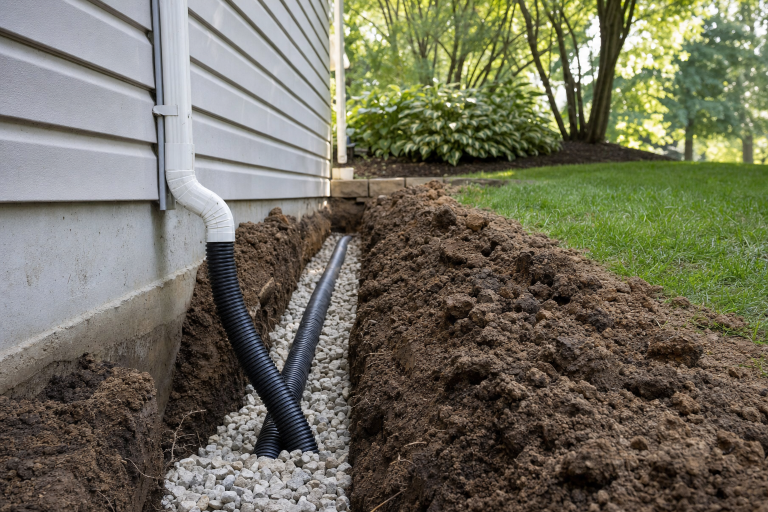
Good landscape design Walled Lake MI work also accounts for the systems underneath the surface. If a property needs drainage corrections, those get designed into the plan before planting begins, not added as an afterthought. The same applies to irrigation. A planting plan that does not account for how beds will be watered is going to create maintenance problems within the first season.
Why Landscape Design Walled Lake MI Properties Require Local Knowledge
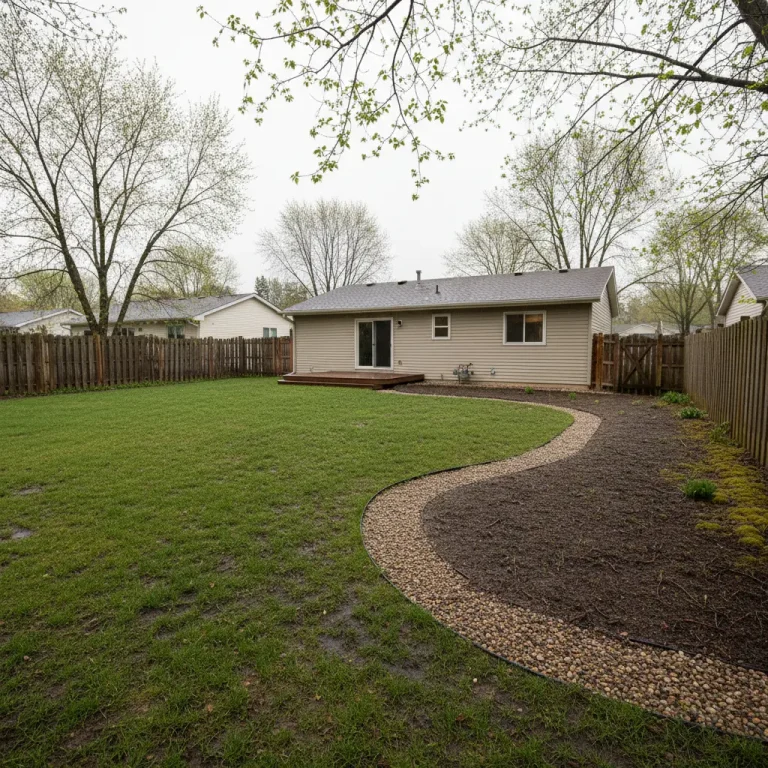
Walled Lake sits in Oakland County, and the soil conditions here are not forgiving of generic design decisions. The heavy clay content that runs through much of this area holds water longer than most homeowners expect. Properties near Walled Lake itself, and along the lower-lying streets closer to the lake’s eastern shoreline, deal with seasonal saturation that will kill plants installed without proper drainage planning. We have written in more detail about how this plays out in our post on French drains in Walled Lake, MI, but the short version is that clay soil changes what you can plant, where you can plant it, and how you need to grade the surrounding area.
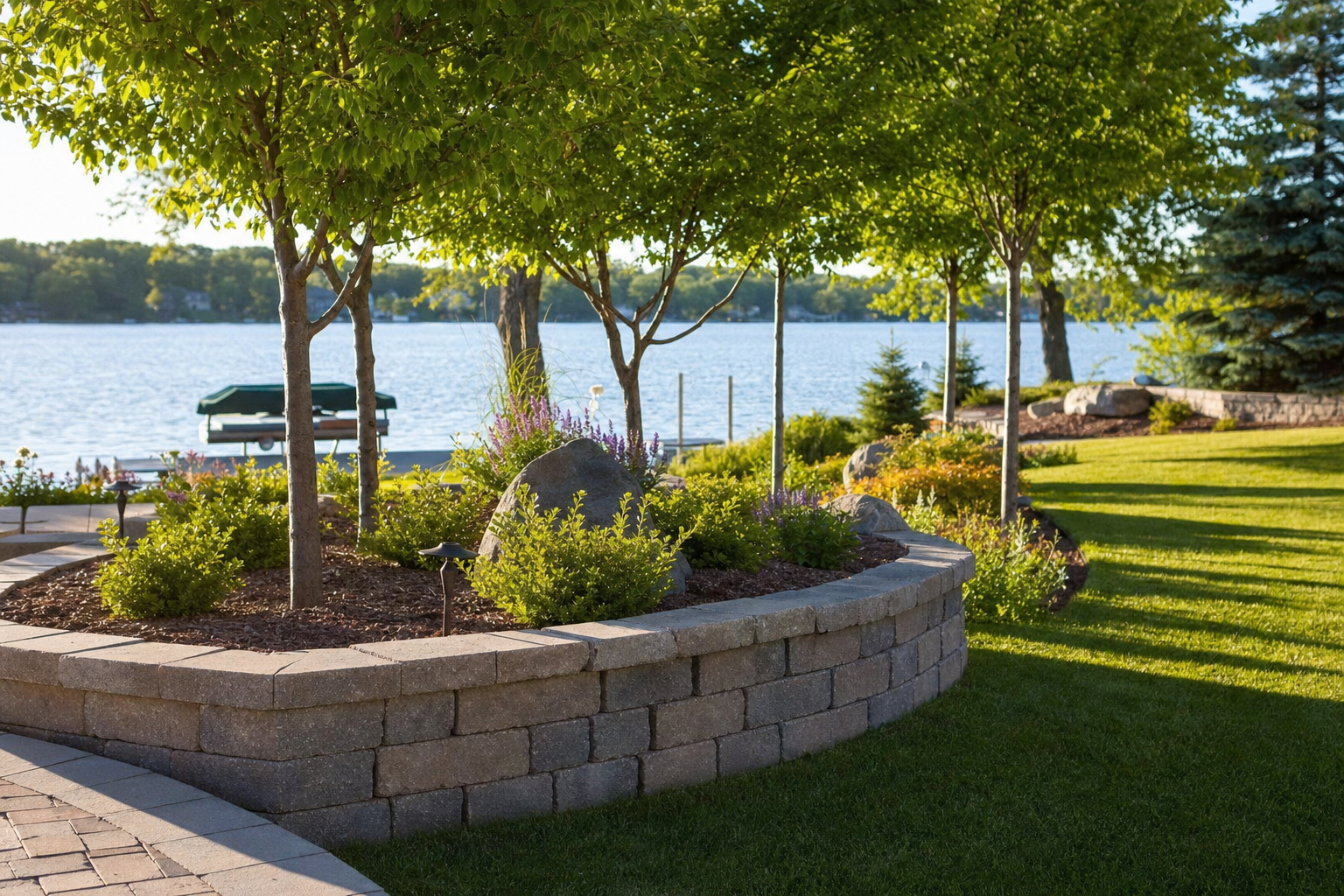
Freeze-thaw cycles are another factor that shapes every design decision. Michigan winters do not just get cold, they move between freeze and thaw repeatedly through the season. That movement affects how retaining walls are built, how paver bases are compacted, and which plant species will actually return in spring. A design that looks good in May but does not account for what February does to a southeast Michigan landscape is going to show its problems fast. Our post on retaining wall installation in Walled Lake, MI covers how that freeze-thaw stress specifically affects structural elements in the landscape.
We also factor in tree canopy when designing planting beds. Walled Lake properties, particularly in established neighborhoods off Pontiac Trail and around the older subdivisions near the lake, often have mature oaks and maples that create dense shade and compete aggressively for soil moisture. Plant selection in those conditions requires a different approach than a sunny suburban lot in Novi or Farmington Hills.
What to Expect During the Design and Installation Process
For most residential projects, our process moves through three stages: site assessment, design development, and phased installation. The site assessment happens first and takes anywhere from one to two hours depending on property size. We are looking at grade, drainage, sun and shade patterns, existing plant health, and how the hardscape and softscape elements currently relate to each other.
Design development follows. For smaller projects, this might be a straightforward planting plan with material specifications. For larger projects involving hardscape, lighting, and irrigation, the design document gets more detailed and typically includes a layout drawing, plant list with spacing, and notes on any grading or drainage work that needs to happen before installation begins. We coordinate with our irrigation team early in this stage so that head placement and zone planning align with the planting layout rather than working against it.
Installation is sequenced deliberately. Grading and drainage corrections happen first. Hardscape goes in next, since heavy equipment and material deliveries will damage any planting done before that work is complete. Plants go in once the structural elements are set, and ongoing maintenance planning begins from the day of installation, not after the first season of problems.
How to Know When Your Property Is Ready for a Design Plan
If you have been managing your yard reactively, adding mulch here, replacing a dead shrub there, and the overall result still looks unresolved, that is usually the clearest sign that a design plan would serve you better than another round of spot fixes. Landscape design Walled Lake MI projects tend to produce the most lasting results when the homeowner is ready to think about the property as a whole rather than addressing one section at a time.
May is a good time to start this conversation. The ground is workable, planting season is open, and there is enough of the growing season left to get plants established before the heat of summer stresses new root systems. A design started now can be installed in phases through the summer and into fall, with the heaviest planting work timed for the cooler weeks in September and October when establishment rates are highest in southeast Michigan. Starting the landscape design Walled Lake MI process in spring also gives the team time to sequence drainage corrections and hardscape work before the ground hardens again in late fall.
If you are ready to move from reactive yard management to a property that works as a connected system, our team at Outstanding Lawn serving Walled Lake is available to walk your property and talk through what a plan would involve. You can reach us through our contact page to schedule a site visit.
FAQ: Landscape Design in Walled Lake, MI
When should homeowners start planning this project?
Start planning before the problem is urgent. That gives the crew time to evaluate soil, drainage, access, materials, and scheduling instead of rushing the work.
What affects the final recommendation?
Property layout, grade, drainage, soil conditions, existing hardscapes, plantings, traffic patterns, and the owner’s long-term goals all shape the right approach.
Why hire a local professional?
A local team understands the climate, soil, permitting habits, material performance, and seasonal timing that can change how the work should be designed and installed.