Late-Winter Snow and Ice Management Tips for Southeast Michigan Commercial Properties
By mid-February in Walled Lake, Novi, and Farmington Hills, winter can feel like it has already made its point. Then one more storm rolls through overnight, temperatures hover around freezing, and a parking lot that looked fine at 5 p.m. becomes slick before the morning rush. That is exactly why commercial snow services in Walled Lake, MI and the surrounding Oakland County area need more than a plow showing up after accumulation.
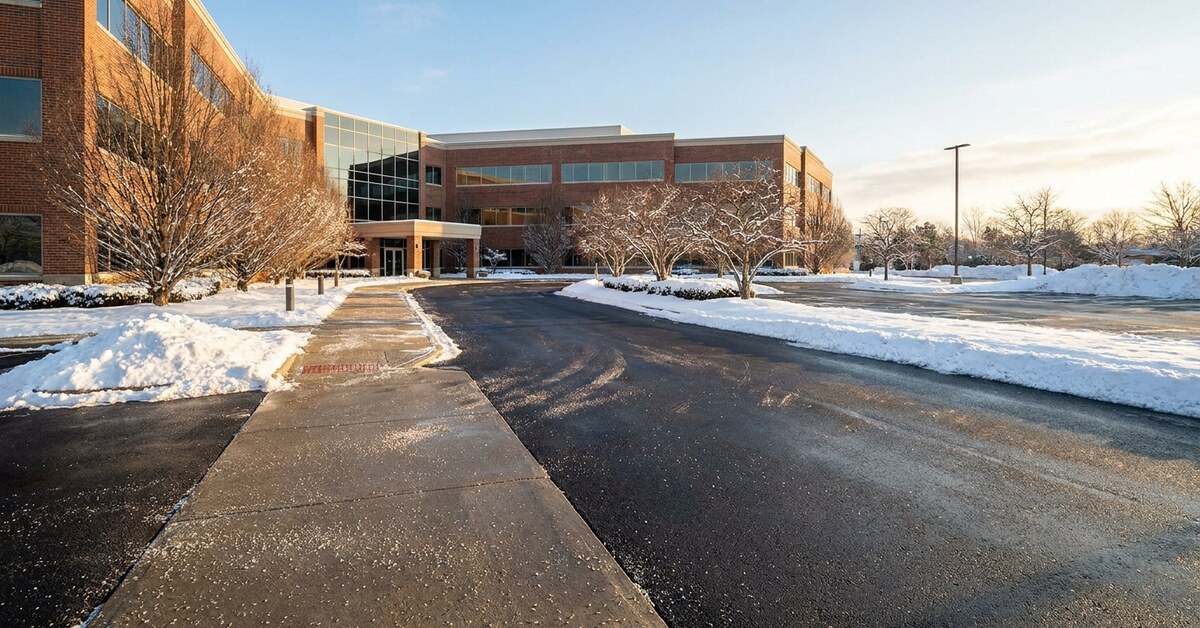
Late winter snow management is about timing, visibility, access, and preventing refreeze. Commercial properties have more moving parts than a driveway: employees arriving before sunrise, customers walking across paved areas, delivery vehicles entering side lots, and shaded sidewalks that stay icy long after the sun hits the road. A practical snow and ice plan helps keep the property usable while reducing the chaos that follows a messy Michigan storm.
Why February Snow Events Are So Tricky in Oakland County
February weather in southeast Michigan is rarely simple. A storm may start as snow, shift to sleet, melt during a brief warmup, then refreeze after dark. This freeze-thaw cycle creates some of the toughest conditions for commercial property owners because the visible snow is only part of the issue.
Late-winter properties often deal with:
- Black ice near entrances and shaded walkways
- Packed snow in parking stalls and drive lanes
- Slush that freezes into uneven surfaces overnight
- Snow piles blocking sightlines or drainage paths
- Salt residue that needs the right application strategy
For businesses, medical offices, retail centers, HOAs, and industrial properties, these details matter. A plowed lot can still be frustrating or unsafe if the walkways, curb cuts, and transitions are ignored.
Start With the Highest-Traffic Access Points
Every commercial site has priority zones. These are the areas that need attention first because they affect daily operations and customer experience. Entrances, handicap-accessible spaces, main sidewalks, delivery doors, and primary parking lanes should be evaluated before secondary spaces.
Outstanding Lawn & Landscape’s commercial snow services are built around this kind of practical access planning. A good snow response should answer a simple question: can people safely get where they need to go?
Snow Plowing Is Only One Part of Ice Management
Plowing clears accumulation, but it does not eliminate every hazard. Thin films of ice can remain after a blade passes over pavement, especially when snow has been driven over before service begins. Deicing becomes especially important when temperatures bounce above and below freezing.
Late winter deicing should be thoughtful, not excessive. Too little product may fail to prevent refreeze. Too much product can create residue and waste. The right approach depends on pavement temperature, expected precipitation, drainage, traffic volume, and the type of surface being treated.
Watch Where Snow Is Stacked
Snow placement is easy to overlook until the pile becomes a problem. In February, accumulated piles may already be large from earlier storms. Adding more snow in the wrong area can block visibility, cover signage, crowd parking spaces, or melt across walkways during the day and refreeze at night.
When evaluating a property, look for snow storage areas that keep meltwater away from high-traffic pavement. Good placement helps the site function better after the storm, not just during the cleanup.
Drainage Matters More Than Most People Think
Snow management and drainage are connected. As temperatures rise, meltwater moves across pavement and landscape beds. If it has nowhere to go, it can pool in low areas, create icy patches after dark, or wash salt into places where it is less effective.
Properties with recurring drainage problems may also benefit from broader landscape design and installation services once spring arrives. Regrading, drainage improvements, and better bed design can reduce winter headaches in future seasons.
Use February as a Planning Month for Spring Repairs
Snow and ice reveal weak spots. You may notice heaved pavers, cracked pavement, damaged edging, tired landscape beds, or areas where plow piles have stressed turf. Keep a running list now so repairs and improvements can be handled once conditions allow.
If hardscape edges, walkways, or retaining areas took a beating this winter, the hardscaping team can help assess what needs repair or replacement before the outdoor season gets busy.
A Simple Late-Winter Commercial Snow Checklist
| Area | What to Check | Why It Matters |
|---|---|---|
| Entrances | Ice, slush, refreeze | First impression and safety |
| Walkways | Packed snow and shaded ice | Pedestrian access |
| Parking lots | Drive lanes, stalls, snow piles | Traffic flow |
| Drainage paths | Meltwater direction | Refreeze prevention |
Keep Communication Clear Before the Next Storm
Commercial snow service works best when expectations are clear before the weather turns. Property managers should know trigger depths, priority areas, deicing preferences, access instructions, and who to contact if conditions change during business hours.
Outstanding Lawn & Landscape serves Walled Lake, Novi, Farmington Hills, and nearby southeast Michigan communities with practical outdoor property services. If your commercial site needs a more reliable winter response, call (947) 214-8664 to talk through the property and the priorities that matter most.
Late winter is not the time to coast. A little planning now can keep your property safer through the final stretch of winter and make the spring transition much smoother.