Your Yard Is Sliding Away: What Retaining Wall Installation in Walled Lake, MI Actually Fixes
Most conversations about retaining walls start with the finished look: the materials, the tiers, and the way a wall can reshape a backyard. But homeowners usually start searching for help because something more urgent is happening. Soil keeps moving. Mulch washes into the driveway after every rain. A slope slowly collapses toward the patio, walkway, or house.
If that sounds familiar, retaining wall installation in Walled Lake, MI is not just a cosmetic upgrade. It is a way to control soil movement, manage drainage, and protect the usable parts of your yard before a small erosion issue becomes a much larger repair.
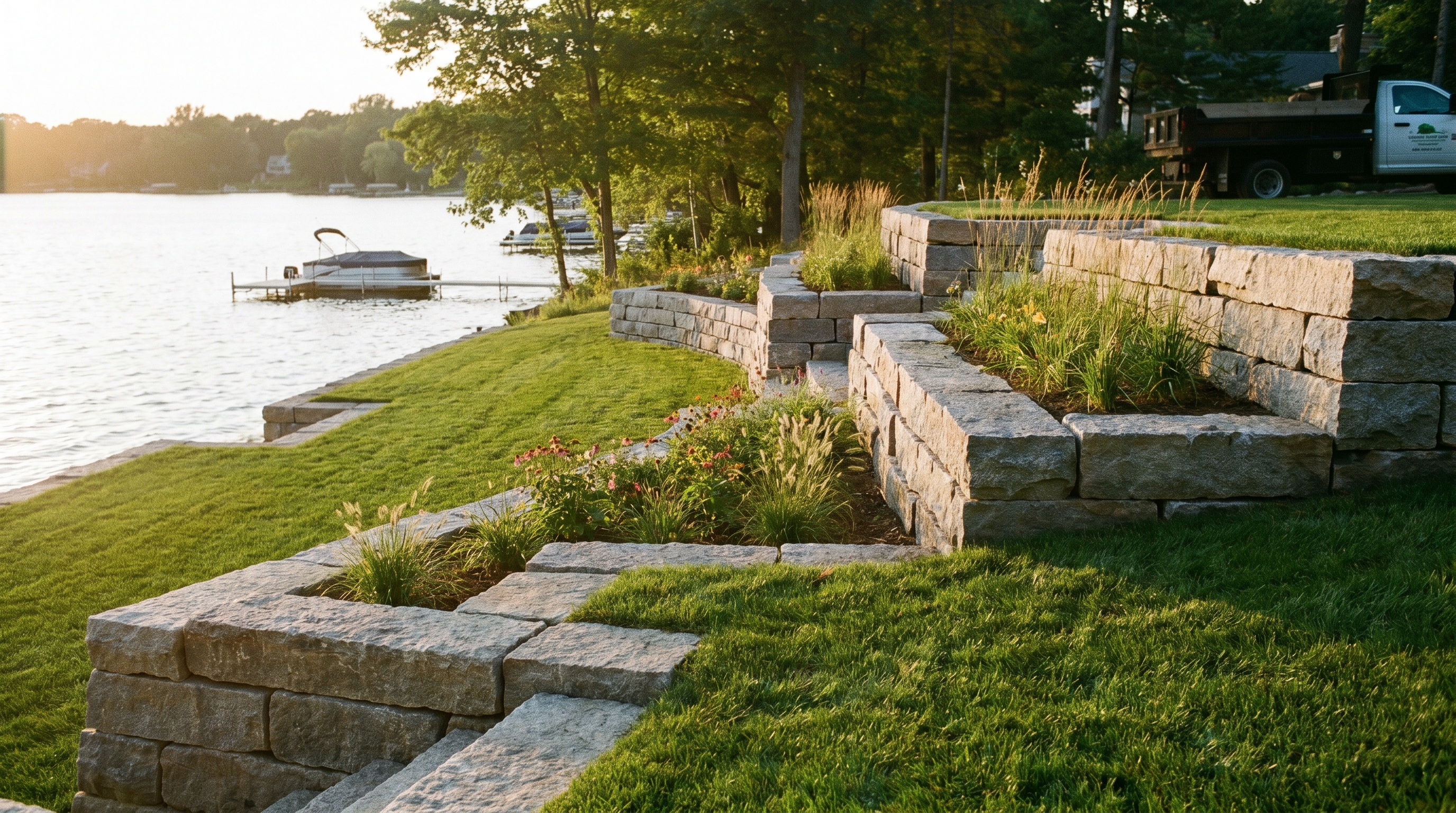
You might be noticing a low spot that keeps getting lower, a garden bed that shifted over winter, or a slope along the side of your property that is starting to undercut the lawn above it. These are not just visual problems. Left alone, they can affect walkways, patios, steps, and sometimes the foundation area near the home.
What Is Actually Causing the Soil to Move?
The short answer is water and pressure. When soil on a slope becomes saturated, it loses some of its ability to hold itself in place. Gravity does the rest. If there is no structure interrupting that movement, the soil migrates downhill and takes mulch, plant roots, patio edges, and lawn areas with it.
Freeze-thaw cycles make the issue worse. Water in the soil freezes, expands, and loosens the ground. When it thaws in late winter and spring, that loosened soil is more vulnerable to movement. In Walled Lake, where hard freezes are followed by wet springs, this cycle can repeat enough times to create real cumulative damage on unretained slopes.
Clay-heavy soil can compound the problem because it holds water longer than sandy soil. If you are seeing erosion and slow drainage in the same area, those problems are probably connected. MSU Extension’s drainage resources explain why soil type and water movement matter so much in Michigan landscapes.
Why Walled Lake Yards Often Need Retaining Walls
Walled Lake and nearby communities have many properties with natural grade changes around the lake and surrounding neighborhoods. Some lots drain well for years before settlement, runoff patterns, and seasonal freeze-thaw cycles begin exposing weak spots.
That is why retaining walls often pair with broader hardscaping and grading work. A wall may be the visible structure, but the long-term performance comes from the base, drainage stone, backfill, wall height, and how water is routed once it reaches the wall.
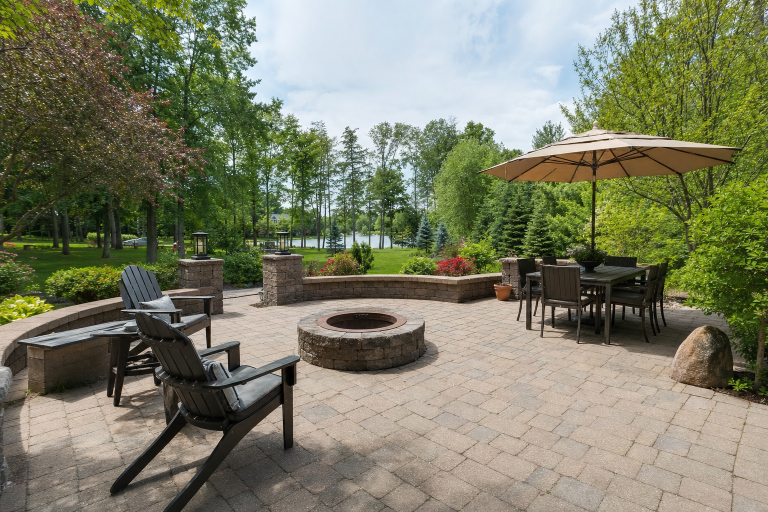
For homeowners planning a larger outdoor project, it also helps to think about how the wall connects to patios, steps, planting beds, and access routes. Our landscape design and installation work can account for those pieces together instead of treating the wall as an isolated fix.
Common Mistakes That Make Retaining Wall Problems Worse
The first mistake is using landscape timbers or basic block stacking as a short-term fix for a slope that needs real structure. Materials that are not designed for soil pressure can lean, separate, or fail within a few seasons.
The second mistake is building without proper drainage behind the wall. A retaining wall holds soil back, but if water has nowhere to go, hydrostatic pressure builds behind the structure and eventually pushes through, under, or around it. Gravel backfill and a perforated drain pipe are not optional details on walls that need to perform.
The third mistake is undersizing the wall. A wall that looks proportional to the slope may still be too short, too shallow, or too lightly built to manage the load above it. Freeze-thaw stress adds another layer of movement, and Michigan State University research on freeze-thaw damage in soils shows why water control matters in cold-region construction.
What Proper Retaining Wall Installation Involves
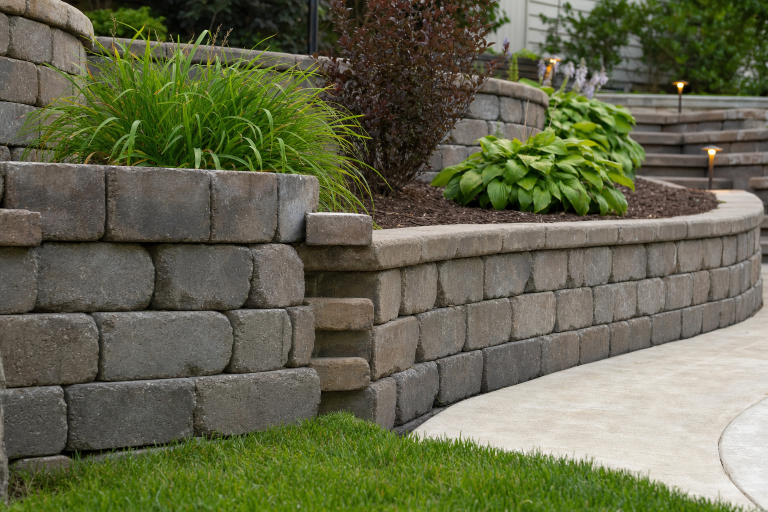
A properly installed retaining wall starts below grade. The base course is set on compacted gravel, level and deep enough for the site conditions. Each course is installed with the right setback so the wall works with the soil load instead of fighting it straight on. Drainage is built into the system from the beginning, either through a gravel column behind the wall, a perforated pipe at the base, or both.
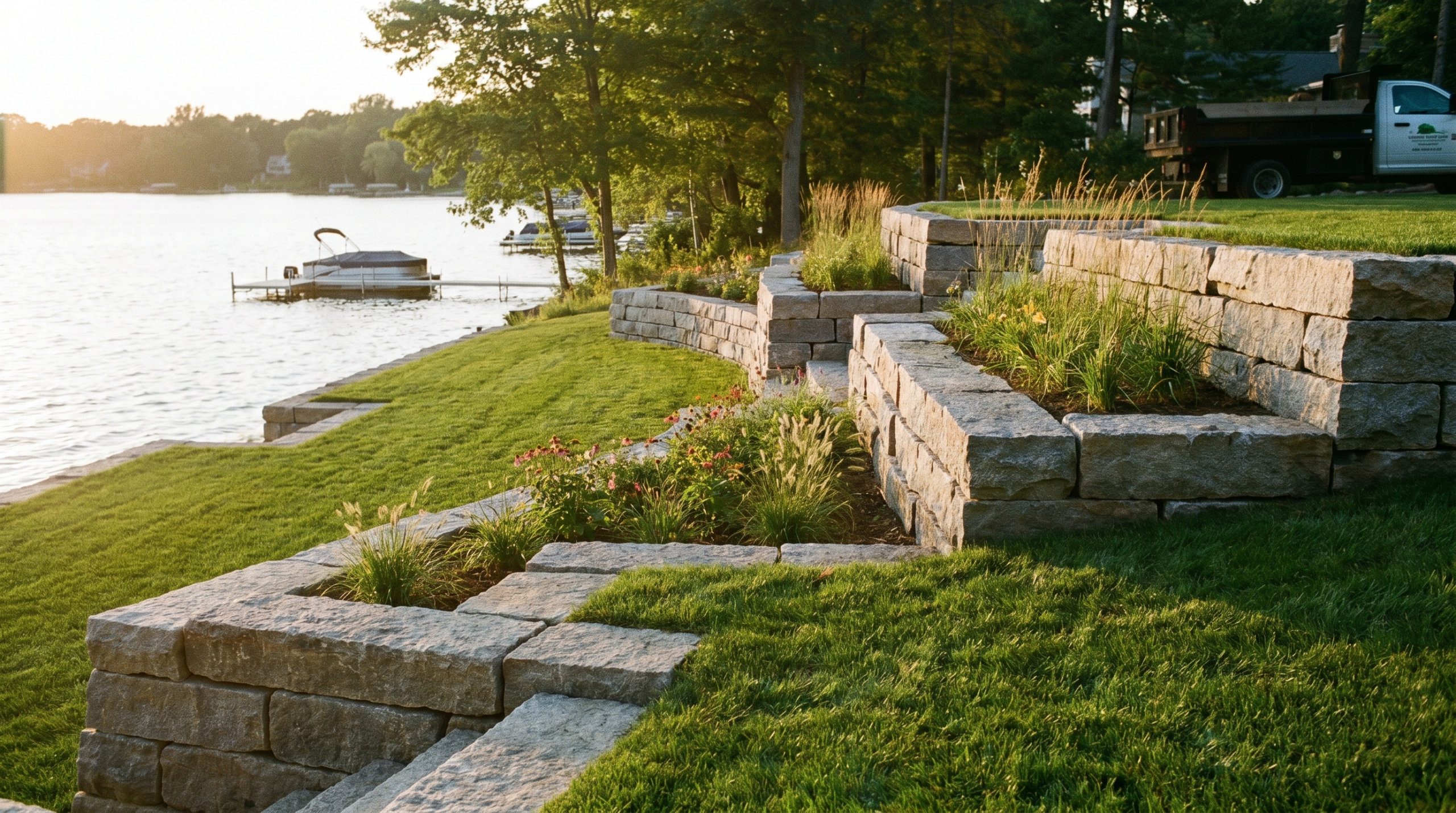
Material choice matters too. Segmental retaining wall block, natural stone, and poured concrete each have different load tolerances and finished appearances. For many residential Walled Lake projects, engineered block systems offer a strong mix of durability, drainage compatibility, and clean curb appeal.
If the wall is part of a larger yard improvement, planning it with the surrounding landscape is the smarter move. It can support planting beds, define outdoor rooms, improve access, or make a sloped side yard more functional. That is where the wall stops being only a repair and starts becoming part of the property design.
When to Stop DIYing and Call a Professional
If the slope is more than three feet tall, if there is a structure, driveway, patio, or walkway above it, or if a previous fix has already failed, this is not a project to guess through. The cost of a failed wall, including removal, excavation, damage repair, and replacement, is almost always higher than doing it correctly the first time.
If you are seeing active erosion or soil movement this spring, that is the signal. It is unlikely to stabilize on its own. Homeowners in the area can also review our Walled Lake service area page to see more about the local work we handle.
Frequently Asked Questions About Retaining Walls in Walled Lake
What causes soil erosion on sloped yards in Walled Lake, MI?
The biggest factors are water saturation, slope pressure, freeze-thaw cycles, and clay-heavy soil. Once water starts moving through a slope, it can carry soil, mulch, and plant roots downhill over time.
Do I need drainage behind a retaining wall?
Yes. Drainage is one of the most important parts of the wall. Without gravel backfill and a proper drainage path, water pressure can build behind the wall and cause movement or failure.
How tall can a retaining wall be before I need help?
Any wall holding back a meaningful slope deserves careful planning, but professional assessment is especially important once the wall is around three feet tall, supports nearby structures, or replaces a failed wall.
Can a retaining wall make my yard more usable?
Yes. A retaining wall can create flatter planting areas, support patios or walkways, improve access, and define outdoor living spaces when it is planned as part of the overall landscape.
Ready to Fix the Slope Before It Gets Worse?
Outstanding Lawn & Landscape builds retaining walls that solve the underlying problem, not just the surface appearance. If you are seeing erosion, sinking beds, or a slope that keeps shifting, contact our team to talk through what a proper fix would look like for your Walled Lake property.